
Podcast · Episode 26
Why Mental Health Sounds Different To Every Generation: Tyler Thompson
Guest: Tyler Thompson, award-winning speaker and youth communication coach. Host: Alastair Greener.
Audio
Video
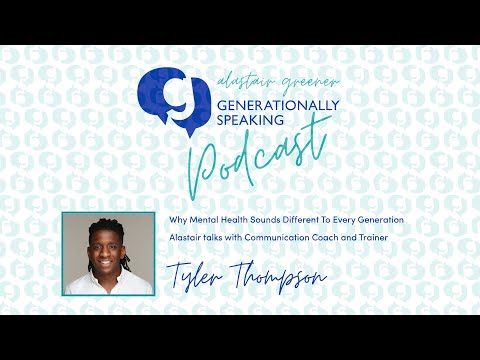
In this podcast Tyler Thompson, (award-winning speaker and youth communication coach), shares how his split upbringing of local roots and private-school opportunities, led him into public speaking and youth work. He explains how he connects with young people, why mental-health and phone culture matter, and practical ways both young and older people can close the communication gap.
Episode highlights
- Tyler’s background: growing up in Edmonton, the influence of schooling and debating on his speaking career.
- How public speaking and debating shaped his confidence and later work with corporates and youth.
- Observations on youth mental health, the accelerating effects of COVID and social media.
- Practical tips for connecting with young people: use their slang, lean into their passions, keep sessions fun.
- Role-modelling in action. Why young people respond to adults who are “real” not preachy.
Tyler Thompson Takeaways:
- Listen first . Let them feel heard; that builds trust far faster than lecture-style teaching.
- Meet young people where they are . Earn their slang, their tech, and the things they care about.
- Find each young person’s why . Their interests are the lever to pull them out of unhealthy routines.
- Set clear boundaries with compassion, kindness plus structure works better than coddling or shouting.
- Advice for older people . Spend time in younger spaces and try to see the world through their lens before judging.
- Advice for young people . Be willing to learn from older people’s experience. Value can flow both ways.
Tyler Thompson Links
Read the full transcript
Automatically transcribed, so there may be the odd slip.
Alastair GreenerHello, and welcome to another episode of the Alastair Greener Generationally Speaking podcast, where we look at bridging the generation gap by debunking myths, tackling stereotypes, and sharing practical tips on how we can build stronger intergenerational connections. Now, today I'm talking with an award-winning speaker, communication coach and trainer, known for his ability to engage audiences, spark participation in immersive training workshops. He's earned glowing reviews from some of the UK's renowned organizations, including the NHS, the Metropolitan Police, and the Mayor of London's Violence Reduction Unit. So welcome Tyler Thompson.
Tyler ThompsonThank you very much. Very kind introduction. It's weird hearing it back. Thank you very.
Alastair GreenerNo one else know you wrote it. That's okay. Uh, Tyler, it it it's great to chat. You've got a, a fascinating background. We were just talking before we started recording about some of the things that you've, that you've done and you've and I, and I actually think this multiplicity of careers is, is a benefit to someone because, especially in what you now do in, in helping other people communicate effectively. It gives you that strength of background because you understand many people's backgrounds. I wanna start off though, if I may, just talking a little bit about you and your upbringing and, and where you came from. 'cause I think that shapes who we are today in, in, in many respects and certainly shapes the way we see life and we see the world. So maybe just give us a potted view of you growing up in North London, what it was like and, and, and you know, how you were.
Tyler ThompsonYeah, absolutely. So I, yeah, grew up in Edmonton, north London and Edmonton. I love Edmonton. It's an area that is, is of, of like typically low socioeconomic deprivation or high socio-economic deprivation. But it is home is what I know. Um, but I think I lived quite an. A unusual life because I ended up going to this private school, like primary school, outside the area in Southgate. We mentioned Southgate earlier. And so I lived, uh, and I wasn't rich by any means, but I'm like scrambled money together for, for, for it means, and like remortgage in the house. And, but it means that I ended up going to this school. So it's, I ended up living potentially a different life than I would have had I not, and then from that primary school, I ended up going to a grammar school in Barnet. So then I, yeah, lived. Two separate lives, I guess, of growing up and being in Edmonton and being around the things that happened in Edmonton, but going to school outside the area, communicating with people that are very different to myself, different backgrounds, different upbringings, and that was, I guess how I ended up learning how to speak was because I got to do public speaking and debating sessions in my secondary school. And so I probably wouldn't be doing what I'm doing now had I not had. Those opportunities. I may not have the voice that I do and sound the way that I do and be able to relate to going into corporates and speak, speaking to executives the way that I can because of those experiences. So, you know, there's elements of privilege there and that is, yeah, that's why I've ended up doing, doing what I'm doing, I guess.
Alastair GreenerYeah. And, and no one can ever underestimate, in my view, the impact of your upbringing on who you eventually become. And, you know, as, as I always say that, you know, we are the, the product of our upbringing in so many respects. I don't wanna get into the deep psychology and philosophy of, of, of what makes a person who they are. But I have a model called the Five Circles of generational influence. And so many of those influences are about our family life and our per immediate peripheral life of school and and so on. So I just wanna ask one question on that, because obviously you were growing up in an area that where maybe children were having very different experiences to you. How did that affect your friendship groups? Did you wind up having many local friends or were they mostly born out of your schooling?
Tyler ThompsonThat's a, that's a great, great. That's something I'm still unwinding to this day. So mostly from schooling, which means they're very, yeah, they were very different to. My family upbringing and it, it creates a, a weird thing in your head. Like it's, it's, it's something that genuinely, to this day, I'm still trying to figure out, because sometimes some friends have very different values because of Yeah. Their own upbringing. But I have this set of values. But we've come together and we've formed this friendship group and close friends with people that maybe I, I'm not actually that similar to. And then. As you get older in your twenties, something start to unravel because you realize there's actually quite significant differences. And so then I've ended up making different friends elsewhere. But as a, yeah, growing up it was much more, yeah, school focused. Um, it's an interest. Alastair is an, it's an interesting.
Alastair GreenerYeah, and don't worry, I'm not gonna get into unraveling all of that right here and now. But it, but it is interesting because that, that creates you as the person that Tyler Thompson became, and, you know, in terms of your generation and the people you mix with now. Uh. How typical do you feel compared with people of your generation that you mix with at the various places that you work and and so on? Would you say that you are a bit of an, an outlier or would you say, actually no. My, the way I feel, the way I communicate what I do is probably fairly typical of people of my age.
Tyler ThompsonI think now fairly typical. I do think so. I think when I'm at, so I still work full time. When I'm at the day job, I feel like I can relate to people my age and the friends that I've made since then. It's, it's often a values thing more so than a, um, yeah, if you've got similar values, I feel like you can make that work and you can communicate well with each other. So I would say now more typical because I've made different friends and I still have some of those old friends as well, but I've also made new ones. So I have the best of both worlds, shall we say.
Alastair GreenerYeah. And that's the natural evolution of life, isn't it? We sort of pick up new friends and others have drift off the other end, if you like. And you know, you've, you've had a fascinating career 'cause you've done quite a few different jobs. Um, you studied at university. Politics. I understand. And you know, how, how, how was that? Because again, politics is, is quite a, you know, it, it can be leads to quite radical thinking.
Tyler ThompsonOh, radical. Think I loved it. I loved the University of Notting. Had a great time. Loved the course. I thought I, some of my radical thinking, maybe you already. I already had it in my brain from before university, from I think seeing how one half of people were living and then going to friends' mansions in primary school and being like, this doesn't, this doesn't seem right. And I think a lot of my thinking stemmed from that upbringing and that experience. Um, so yeah, I loved, I loved politics. I loved the University of Nottingham, and then it led me onto a, a very. Colorful and mismatched career at times. Um, but it was a great time.
Alastair GreenerNow, the reason that you and I got chatting in the first place was because I heard you do a speech all about your work with young people, and that particularly triggered something in me because I think the way that people communicate between generations is absolute. The core of what I'm interested in because I want to be able to bridge that gap so that people actually get each other more, so there's less assumptions, less stereotyping, and and, and so on. What led you to actually want to work with children?
Tyler ThompsonIt is the, the same thing that's led my radical thinking. It's the, it's the experience that I had grown up and knowing that where I am today and the opportunities I've had isn't because I'm some sort of special, super hard work and human being. It's because. Had certain advantages that other kids might not have. And so my whole mission throughout my twenties and every job has been to sort of redress that playing field and give young people the opportunities to, to find 'cause. I think every young person deserves that. And it's not possible to have a quality of opportunity. But as I'll make, I'll do my best to see what, to see how much I can influence it. So yeah, so it took me to working in schools. It took me to the summer camp industry, private tuition, mentoring, coaching, any which way I can, that's my. That's my real bag. If I could just live off doing that, I, I probably would just, I need to add, add money to exist in as well, so, yeah.
Alastair GreenerHow much, one of the things we, we hear a lots of bluntly demonization of the young by the old, and, and let's be honest, that's nothing new. It goes back to Socrates talking about, you know, different views of the young and so on. But in, in your conversations today, when you are supporting younger causes, when you are supporting helping them navigate their way through life, how do you deal with that sort of pushback that you might sometimes get, maybe from older generations?
Tyler ThompsonI don't, I don't necessarily hear a lot of it. The spaces that I'm in are very pro young people and pro youth work, so I don't necessarily hear as much of it as you might. If in, in different circles, but I think anyone who's demonizing young people is play playing the wrong game. I think young people are the future if they're, if they're a flawed that you identify, support them to and help them out of those if they, if you see genuine problems. But I think to demonize them and, and look down on them and criticize young who are still molding and growing, this is the opportunity to help them. So. I would strongly disagree with them, but I don't actually hear a lot of it because of the places that I do work.
Alastair GreenerYeah. 'cause you are already in an, in an environment where they're accepting of the need to help. And, and, and I absolutely echo your sentiments about people who make those judgements. Hence this podcast. I mean, we have a variety of people. I've had the youngest on the podcast has been 15 and the oldest has been 92. So, you know, I try and capture everybody. In between so that we can become a more generationally cohesive, um, society, if you like. I mean, it's a big aim, but it's, it's, it's something that, uh, that I feel very strongly about. And, and clearly you do too. But when we look at you, you've been working with young people for quite some time. What kind of trends have you seen? What differences have you seen? Um, and especially dealing with, you know, looking after children maybe who do come from tougher backgrounds, who do need that extra little bit of help. What sort of. Trends are you seeing?
Tyler ThompsonI think the mental health of young people has declined quite significantly, and I've seen, especially in America. Just an abundance of medication for anxiety, A DHD, depression in, in teenagers. And, and the level of that has just grown rapidly and some of the behavioral concerns in neurodiversity as well has, has grown. Maybe we just we're just identifying it now, but that from when I first started to now, that has skyrocketed. Um, so that is the big thing. What was the second part of the question? Sorry.
Alastair GreenerWell, actually, I just wanted to pick you up on that actually. 'cause that's really interesting. The, and again, I definitely don't wanna get into politics. I would love to talk about politics. I love politics myself, but we want, we don't wanna go down that rabbit hole, but it, you know, is it, is it the, the deep division of society that's causing this problem? Say, why do you think that it's more pronounced in, in America than may be, may be here?
Tyler ThompsonI think. I noticed that after COVID, so I think that was also a thing. A lot of young people going through that experience missing out on years of the typical socialization at school. And you've got the phones, like these things are not good for adults, let alone teenagers. And I think that is also a big problem. I worked at a camp in Canada this year and you could see they would give the kids phone time and like it was like. You had like a group of like addicts, like when it was phone time, they were like running, they'd clam around the desk and so you could see that this thing and the withdrawal from it and the stuff that goes on with Instagram and TikTok and all of that can also probably cause some problems in the brain development. Um, so I would say that is part of it.
Alastair GreenerYeah, no, very, uh, very, very well held back on that one. Um, it, it, it, it's a huge deep topic, and, and we know that, you know, that, that social media and COVID and, and actually I think, to be honest with you, I think it was a trajectory we were on accelerated by social media and COVID, that, that's my personal view, but. Coming back to, to, to youngsters, how do you connect with them? Clearly at your age, you know, you are, um, you know, you are not that far away from them in terms of age, but how do you connect with them? What do you do to enable them to feel that they can talk to you, that, um, they feel that you are actually willing to listen?
Tyler ThompsonI, I, I show them, I talk to them on their level. I talk in the way that they might talk. So, you know, talk about
Alastair GreenerWhat does that look like?
Tyler ThompsonThey speak a different, they say they have different slangs to me, and they, they speak in different ways that I would, I heard the word coded the other day, which is like a slang term for saying something's like something else. I never grew up with that, but using some of their terms. Um, also just like I,
Alastair Greenerwas, by the way, I'll just say on on coded. I was in a school the other week and they wrote some feedback at the end of the day and they called me Slay.
Tyler Thompsonyeah. Yes.
Alastair Greenerto look it up afterwards to realize that was actually being complimentary. So you are absolutely
Tyler ThompsonExactly.
Alastair Greenerdifferent language.
Tyler ThompsonThey speak a different language. So adopted that where you can and embrace, I just embracing work with young people, with a, with an element of fun and a smile and a smirk knowing, not coming in like a teacher of telling them off X, y, z, like just being youthful and fun is, and it keeps me young as well. So it's, it's, it is fun for me as well because it in the, you know, the daily grind of life. You can get stressed and miserable, but being at those camps, it's like, oh, I feel young and happy again. So that's a part of it. And, and yeah, listening to them, taking their concerns seriously. And because you are a trusted adult for them and some of them don't have that as well, just taking that responsibility serious. I will say though, though, I don't have as much energy as I used to and I can't run and, and like I am getting, I do feel tired, I do feel older, but I can still chat in the same way I would say.
Alastair GreenerAnd and I, and I love your motivation to work with children, to give them that opportunity, which all of us should be yearning for, to ensure that every child, wherever possible, gets as much opportunity as they possibly can, and they get exposed to that. When you are talking to them, you're clearly speaking their language, but how do you motivate them to step out of their comfort zone and to ditch the phone and do other things? What kind of things do you find that you can connect with outside of, you know, as I say, social media?
Tyler ThompsonI often find, I'm thinking of a specific example of a kid who his behavior was showing up in a bad way because of X, Y, Z issues. But it was, it's finding out what it's important to them the same way you would if you are working with a team at work and you need to understand their why and their motivations. Find out about them, find out what their interests are, their hobbies are, their passions are. And lean into that. Talk about that. Find any connection that you can and lean heavily into that 'cause there'll, there'll be something that you can find some sort of tenuous link that you can relate to it. Um, so find out their passions, their why, their motivations, what do they wanna do when they're older? What do they do on the weekend? What are their friends like? Find out as much as possible. And then once you find something that you can connect to latch on, I would say.
Alastair GreenerA a, a question that always comes up with, with youngsters is this balance between, well, you know what? That's just part of growing up. That's not a mental health issue. That's just growing up. Where do you sit on that spectrum?
Tyler ThompsonThat's such a good question. Oh, I am much more of a softy, softy kind of person, so I'm, I'm more on the, maybe I'd be referred to as a snowflake. I dunno. I'm more on that side of the fence because I think. Uh, growing up is hard and there are, there are, there are mental health issues and I, and I think it often comes from the older generations being like, well, I went through it and I survived and I'm fine. So you can be as well. But then it's like, often you're not fine because you might have a bit more compassion if you were fine. So I think I, I'm not, I'm more on the, if you say you're going through this, I'm here for you and I support you. I, I'm not gonna mollycoddle you. Um, and if you do the wrong thing or you're behaving, ways aren't right, I'm still gonna, you know, have that line.
Alastair GreenerWell, I was gonna say, how do you, how do you approach that? You know what I would call a bit of the tough love kind of approach. You know where you are, you're showing them guidelines, you're showing them a little bit of structure because at the end of the day, at some stage, they're going to be coming into a society that requires formity. How do you broach that one?
Tyler ThompsonI, how do I approach it? I am a, it's just boundaries. I think. I know that they also want the boundaries as well. So just being clear that not being afraid to say, this is not okay what you've done. I still have love for you. I still care for you, but you can't do this. Not in this environment, not when I'm around, not. And it's just having that, having that firm boundary despite the fact that you know, that they might be struggling with something. And both of those things can exist, I think. So you can have the compassion for them, but then also be like. That's not on. You need to set out the session X, Y, Z.
Alastair GreenerSo you are, you are dealing with a lot of youngsters at the moment, as you say, working in London and so on. What are some of the things that you are doing with youngsters today? How are you helping them and what are the kind of practical things that you are doing that is, is benefiting them?
Tyler ThompsonSo on a, Ooh. On a practical level. See, the thing is a lot of the kids I'm working with are now international in terms of like delivery. Um, one-on-one delivery. Um, it's being a, being a, being a, the word, I don't like the word role model, but being a role model for, for that person. And modeling what, um, yeah, modeling what good behavior could, like having someone to look up to. 'cause I know when I was. 17. I went to one of these summer camps and I thought the counselors were superheroes and they weren't doing anything. They were just being themselves. Maybe that's what it is, being myself and being, and being cool with that. But I just thought they were the coolest people in the world and I wanted to be like them. I went to uni, the same uni as they were so I could be like the same course. And so just being like that for some, for, for a young person and giving them, um, yeah, giving them something to look up to, but also. Allowing them to, you know, when I think about what's there, what matters to them and what their why is pushing them to go pursue that and follow their dreams. And it sounds really corny, but like giving them hope of what could be and what their life could be like. And they don't have to necessarily do this and follow this same path and behave in this way because things could be better or different, shall we say.
Alastair GreenerYeah, and it, it, it's quite interesting. Going back to a little bit before when you were talking about the differences between youngsters in the United States and Canada, and and the uk and even within the uk there's vast differences as you highlighted already from your own upbringing.
Tyler ThompsonHmm.
Alastair Greenerareas have their own challenges for youngsters. You know that if they're not engaged, they might find something that isn't as positive to engage with. What's your view on that and what what should be and can be done about that?
Tyler ThompsonWe should provide young people from these difficult backgrounds with opportunities to do things that will keep them off of a more negative path. So that's, you know, sports clubs, youth clubs, which are all getting, you know. Drastically kind in funding, um, mentoring, coaching, giving them an opportunity to see. I think mentoring is, it can be lifesaving, like having a trusted adult who you look up to can steer your way. Often someone who's been through what you've been through as well. I think that can just be the best thing for a young person. So giving them opportunities, given them like work experience opportunities, something that takes them outside of their life that they can see that's around them. And give them a vision of what could be possible. 'cause that's what I had. That's literally, I was able, if you can't see something, then how can you aspire to it? But I could see that this is how, this is how people live. Not that I was from, you know, I'm not, I wouldn't say I'm from a rough background at all, and I was never, I never don't think I ever would've ended up down this path. But we can't say it, but like, just seeing a different way of living is what people need. I think young people especially because they don't know if, if all you know is. Drugs and violence. And that's what you, that's all, you know, and it's not, that's not their fault either. So,
Alastair GreenerI loved what you said earlier on about being a role model and seeing yourself as a positive role model because, you know, again, I'm very fortunate. I come from a background where I did have positive role models, but there's a lot of people, a lot of youngsters growing up in an environment where they don't have that, and all of a sudden gangs or negative paths become the. The, the role models that they, that they find, and, and you've outlined already, there's some things that you know, we can do as a society to help prevent that. What do you find when you are teaching youngsters about communication? Because. There's a, there's a lot of things about, oh, well, youngsters don't wanna pick up the phone. They only want to message or something. But in fairness, if you've been brought up with that environment, you don't know anything else, and that's the most comfortable mode of communication for you. So how are you helping them in that respect?
Tyler ThompsonSo I am more focusing on the public speaking element and getting them out of their shell. There. I would say they are no different to adults and they have the same fears and reluctance to do public speaking that I have. When I'm doing it with a, with a group of adults that the, the, the same, the same fears. Sometimes it can be a little harder to, you know, they might refuse to get up on stage, which an adult probably wouldn't, but the same underlying fears there. So I think I, I see them in the same way and I see it as a more exciting piece of work as well, because you can help mold them at the beginning of their speaking journey. So, yeah. But similar, similar. A similar reluctance that an adult would have. I would say
Alastair GreenerDo you think that's changed over the last, I dunno, however many years you've been involved working with youngsters? Do you think that reluctance has changed? Do you think the approach has changed? Do you think that the way they're communicating is changing?
Tyler Thompsonthe way that they're communicating is definitely changing because of, because of this. Like I've tutored kids who have. Like sl, like text slang in their essays when they're, when they're going to like GTC level. And so, so I've seen, I've seen that has been a, a, a clear shift. So I think the, the phones and the, just the general more virtual style of communication, not as in person you're going to, the strength for those communication skills is gonna, is gonna fall naturally. So. It's our responsibility as society to, to help them with that and get them off the phones. But then we also have to get ourselves off the phone first. And I, I often hear parents, I don't have kids yet, but I hear parents talk about that and they're like, I don't like the fact that she's on their phone. But it's like, you are always on the phone, so how do you, how do you expect her not to do the same thing? So, yeah.
Alastair GreenerYeah, I was talking to Mark Saxby, one of the earlier podcasts who, as you may or may not know, is a, a social media expert. And he said exactly that same thing. You know, we've got to be aware of what we are doing and the impression we are giving, you know, we are role models, whether they're positive or negative, and the way that we treat the phone, um, is, is such an important aspect. So I, I want to finish off if I may. Talking about how we can improve communication between generations and, and you are a perfect example of someone who is bridging that gap. Uh, between, so I want to ask first of all, tips you've got for younger people to. Work with older people better to communicate better, what can they do? I, I appreciate it's mostly the onus is on adults, and we'll certainly come to them, but is there anything that youngsters can do to improve that communication, uh, between generations?
Tyler ThompsonA hundred percent. And I, I know this from working in the NHS where I was like 23 and working with a team who were much older than me and being open to one. I feel like young people maybe sometimes don't see, they see old people as like, oh, not old people, older people. It's an, oh, what do they know? They, you know, they're all, they're not, they don't know our life now, but they've been through what you've been through many, many times. So you like, you can learn from them. So be willing to listen to them and communicate them on their level. We ask adults to, we ask older people to do it, to younger people. Also try and speak about their dogs or their grandkids or their, like, you can find ways to relate. It's this, it does work the same way. And be open to doing that because you can. Gain so much value from people who have lots of life experience and you can become friends with them. I had friends who were much older than me from working in the NHS, so be open to it. I would say.
Alastair GreenerAnd that's actually really valuable because as you said, if you have been in an environment where you are having to bridge the generation gap, you're almost stiff. Know how to do that yourself, because it's a, it's a natural process. So let's now talk about adults, apart from, let's say, the obvious things of listening and not judging and being genuinely interested, what are some of the other practical tools that people can do as older people to bridge that gap so that the young don't see the older people as out of touch?
Tyler Thompsonspend, spend time where they're at, go and see what's going on on this, on this Instagram thing. And I would find, try and understand their world as much. They're growing up in a different world to the one that they grew up in, and they have. problems. They, if it's a working environment, they relate, the way that they relate to work is gonna be different to you because they're probably struggling with the cost of living. They're never gonna be able to buy a home. They probably won't be able to retire. So understand all of their lens as much as you can, and then you can understand why they may behave in different ways. Um, and yeah, don't look down on them. Um, you already said, don't judge, but that's an important thing. But I would say just try and understand their world. Because it's different to the one that you were in.
Alastair GreenerYeah. It's funny, I, I have a model that, that I use about five steps to get better communication between generations. And one of them is that, don't compare, because actually you talking about what it was like for you growing up is completely irrelevant to them. There's a couple of things that might be similar. You went through that same life stage. But actually that life stage looked very different for you as it does for them. Tyler, it's been great chatting. I've really appreciated those insights and it's great to hear your perspectives as well as someone who's there working with kids, but also now helping them to communicate more effectively. So thanks very much indeed for your time. We're gonna put some, uh, details about you in the, in the socials underneath, uh, and in the show notes. But for the moment, uh, hopefully catch up with you again very soon. But for the moment, Tyler, thanks very much.
Tyler ThompsonThank you very, very much, Alastair. Cheers.
Alastair GreenerAnd thank you for watching or listening. Really appreciate it. And don't forget, we'll be back again in two weeks time. Bye for now. The Alastair Greener Generationally Speaking podcast was presented by me, Alastair Greener. It was recorded at Granary Studios and produced by James Jones. Please follow us and leave us a review wherever you get your podcasts. To find out more, visit generationally speaking.co.uk.